Back

Beyond Time Zones: How LATAM Talent is Redefining Global Performance and Productivity in 2026

January 28, 2026

In today's business ecosystem, hiring in Latin America (LATAM) has moved beyond the traditional story of cost savings to become a strategy for operational optimisation and structural risk mitigation. Within this framework, competitiveness is no longer defined only by production volume, but by the ability to integrate talent centres that guarantee superior performance and long-term financial stability. What was previously defined as "Value Nearshoring" was limited to a simple match of time zones, cultural affinity, and technical quality.

However, having technical expertise is only the starting point. To understand why LATAM is redefining execution standards, it is essential to look at the soft skills development and cognitive competencies of regional professionals beyond their university degrees. There is a clear evolution towards mastering critical skills for the future of work, such as analytical thinking and applied emotional intelligence. This phenomenon allows resilience and self-efficacy to improve how individuals work within complex teams, facilitating smoother problem-solving and immediate adaptation to uncertain environments.

Under this efficiency approach, hiring in Latin America is validated by a robust academic infrastructure, backed by the QS World University Rankings 2026. Institutions such as UBA (Argentina) and UNAM (Mexico) are ranked among the global elite, while Colombia ensures regional excellence with the University of the Andes (#8) and the National University (#12). This talent base is fed by a steady flow of 130,000 engineers per year in Mexico and a community in Colombia exceeding 150,000 IT professionals, supported by 20% growth in graduates and leadership in international ABET (Accreditation Board for Engineering and Technology) accreditations. 

By combining this guaranteed technical ability with time zone alignment for real-time Agile work and a deep Western cultural connection, organisations achieve a high-performance structure. This strategic match boosts engineering velocity, turning remote centres into true engines of global performance that raise the execution standard of the entire organisation. 

To help understand these benefits, a summary of the traditional nearshoring arguments and their core foundations is presented below. This matrix visualises how the region’s academic and geographical base turns into strategic results for global collaboration.
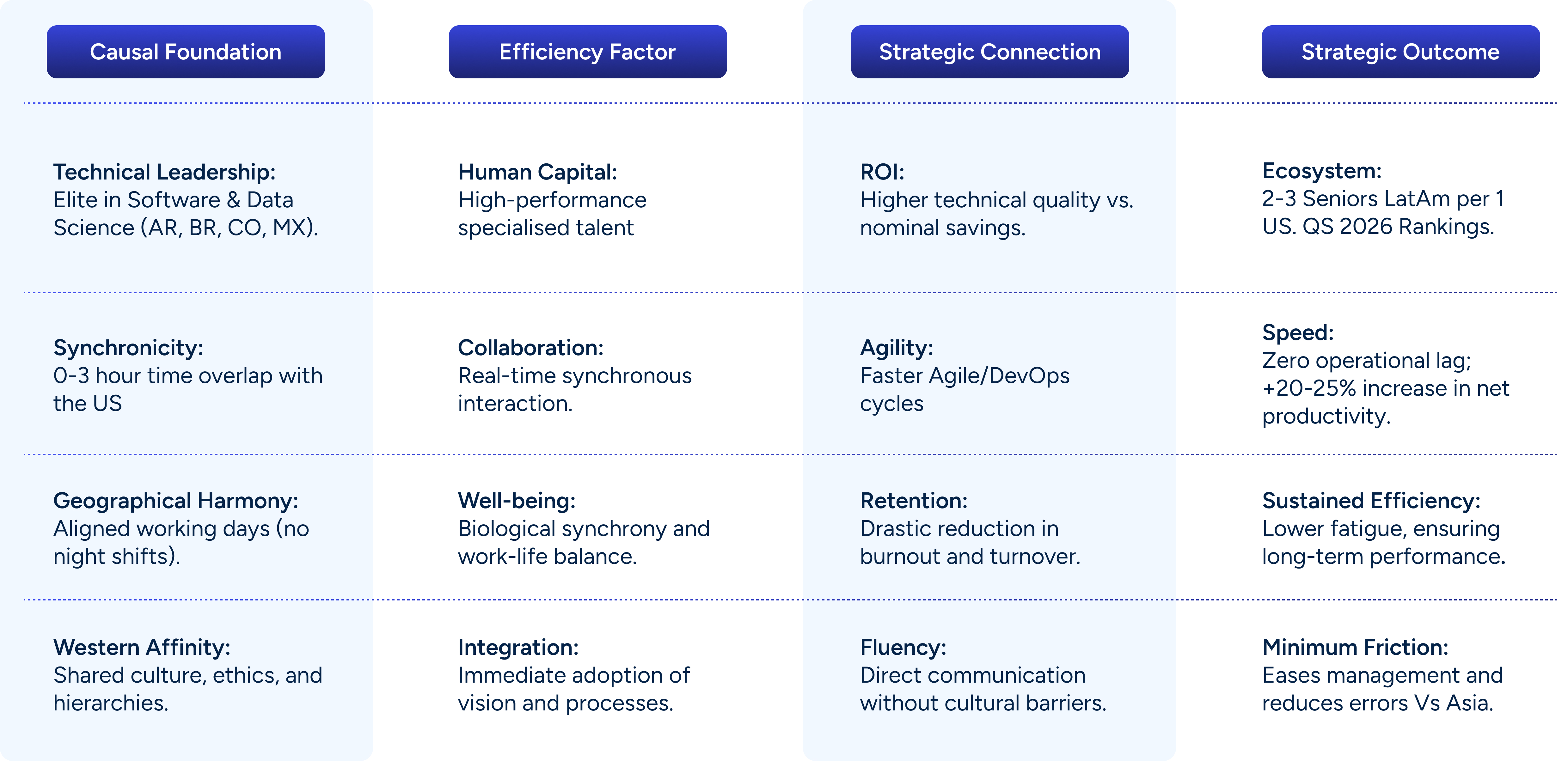
Figure 1: Operational Efficiency Matrix: Traditional Nearshoring Arguments

It is this intersection between verified technical strength and the mastery of cognitive competencies and soft skills that allows international organisations not only to maintain their operations but to enhance them. By decoding the critical skills profile for remote work of regional professionals, it is evident that LATAM’s true competitive advantage lies in its ability to combine critical skills and operational resilience. The next model is built on two core pillars that turn individual potential into real business impact:

Pillar I: Sustained Return on Investment (ROI), aimed at maximising capital through experience density; and Pillar II: Human Capital Quality, focused on cognitive diversity as a driver of innovation.

Figure 2: Pillar I: Sustained Return on Investment

Pillar I: Sustained ROI and the Multiplier Effect

The main differentiator is the "Seniority Multiplier" Effect (Seniority Density). Under this model, there is a direct increase in Code Quality (Talent ROI) coming from cost arbitrage: the budget that would only cover a Junior or Mid position in saturated hubs allows for the hiring of Senior Developers and Staff Engineers in LATAM with advanced skills in analytical thinking and complex problem solving. By hiring in the region, the organisation significantly raises the average experience of the global team.

A Senior professional in LATAM acts as a "Force Multiplier"; their presence increases the productivity of local members by providing access to an expert consultant in the same time zone. These high-level technical profiles do not just write code; they unblock less experienced engineers, perform high-quality Code Reviews, and actively prevent technical debt.

Beyond immediate delivery, this model ensures knowledge management and institutional documentation. While staff turnover is constant in traditional tech centres, LATAM talent shows higher loyalty and commitment to high-impact projects. This stability; highlighted by Remoti's 5% annual attrition rate; reduces team burnout and the hidden costs of constant hiring. By maintaining a much lower turnover rate, deep product knowledge stays within the organisation, allowing a steady focus on building complex features and long-term architecture.

Remoti elevates this paradigm through its Workforce-as-a-Service (WaaS) model, an end-to-end infrastructure that allows companies to scale from 5 to 50 roles in less than 90 days, transforming LATAM talent into a plug-and-play operational engine that increases efficiency by 140%-150%.

In the Fintech sector, a NASDAQ-listed company transitioned from misaligned offshore models in India to a Remoti-managed hub in LATAM. This experience density, combined with real-time synchronous collaboration, turns the budget from a cost into a high-speed investment. The same capital allows for tripling strategic capacity, removing dead time and resulting in technical execution without friction.

A high-speed motion blur of people crossing a city street, symbolizing the efficiency of LATAM human capital, synchronous collaboration, and fast execution for global organisations

Pillar II: Human Capital Quality (Cognitive and Technical Diversity)

On the other hand, the volatile environment of Latin America creates critical soft skills that are difficult to teach (Antifragility): the ability to work in uncertainty, supported by Resilience, Flexibility, and Agility. Professionals in LATAM develop a capacity for adaptation (grit) that is higher than average due to their experience in changing environments. Aligned with the WEF Future of Jobs Report 2025, which predicts flexibility and adaptability as essential competencies towards 2030, this profile ensures fast integration and shorter learning curves.

This adaptability, combined with unique cognitive diversity, drives innovation and allows global teams to solve complex challenges with better operational efficiency. Mastering these competencies is essential for emotional and operational stability in crises. When faced with sudden changes or product crises (pivots), LATAM talent acts as a stable anchor that stays calm and focuses on practical solutions, avoiding operational collapse due to a lack of structure. 

Additionally, the "Cognitive Diversity Dividend" from including Latin American talent results in fewer "blind spots" and more creative solutions. While similar teams tend to solve problems in a linear way, including engineers from the region injects a perspective of resource efficiency that challenges "group-think". Studies by McKinsey and Harvard Business Review argue that cultural diversity significantly increases the chances of higher profitability, as diverse teams question assumptions more often.

To summarise how these operational and human capital benefits turn into higher ROI and financial risk reduction, the strategic components of this model are presented below.
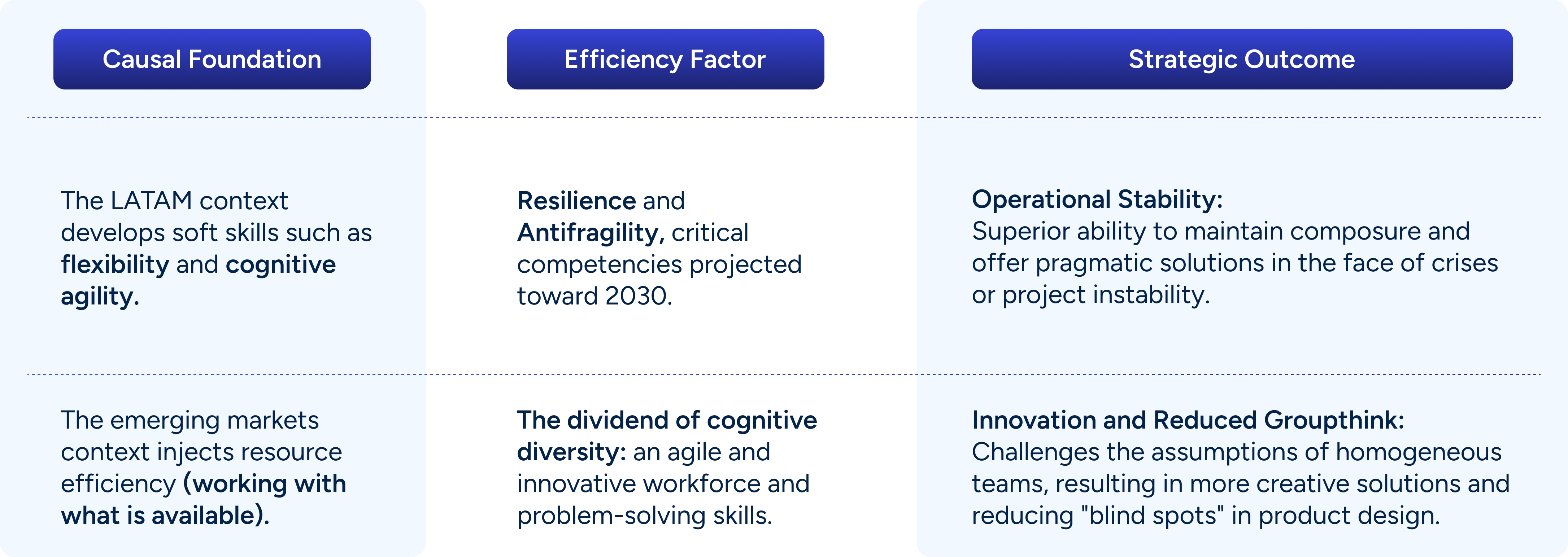
Figure 3: Pillar II: Human Capital Quality

Hiring in LATAM is the most efficient talent management strategy for global organisations today. It offers an ideal "sweet spot" where verified technical quality and high-demand soft skills meet real-time synchronous collaboration, ensuring faster execution and a structural reduction in the risk of turnover and burnout.

To ensure this quality, Remoti’s Talent Scout model provides access to a database of 40,000+ pre-vetted STEM professionals , ensuring that the "Senior Judgement" required for 2026 is met with a 90%+ English proficiency in senior tech profiles and a time-to-present of less than 7 days for the first shortlist.

Likewise, deploying Remoti’s Workforce-as-a-Service (WaaS) infrastructure, organisations inject this "natural cognitive diversity" into their structures. For a global Fintech leader in Real-Time Payments, Remoti bypassed corporate FTE caps by deploying a dual operating model that hired 78 specialized agents in just 3 months. This adaptability, combined with unique cognitive diversity, maximizes innovation and allows global teams to solve complex challenges with better operational efficiency. Mastering these competencies is essential for emotional and operational stability in crises.

Organisations are not just hiring for time zones; they are injecting resilience, increasing technical experience density (Seniority), and ensuring the continuity of organisational knowledge management. These structural factors are what, in the end, define the speed and quality of delivery for a high-performance global team. 

LATAM represents the engine of global agility in 2026.

NEXT ARTICLE
PREVIOUS ARTICLE
PREVIOUS ARTICLE
NEXT ARTICLE
BLOG

Beyond Time Zones: How LATAM Talent is Redefining Global Performance and Productivity in 2026

In today's business ecosystem, hiring in Latin America (LATAM) has moved beyond the traditional story of cost savings to become a strategy for operational optimisation and structural risk mitigation. Within this framework, competitiveness is no longer defined only by production volume, but by the ability to integrate talent centres that guarantee superior performance and long-term financial stability. What was previously defined as "Value Nearshoring" was limited to a simple match of time zones, cultural affinity, and technical quality.

However, having technical expertise is only the starting point. To understand why LATAM is redefining execution standards, it is essential to look at the soft skills development and cognitive competencies of regional professionals beyond their university degrees. There is a clear evolution towards mastering critical skills for the future of work, such as analytical thinking and applied emotional intelligence. This phenomenon allows resilience and self-efficacy to improve how individuals work within complex teams, facilitating smoother problem-solving and immediate adaptation to uncertain environments.

Under this efficiency approach, hiring in Latin America is validated by a robust academic infrastructure, backed by the QS World University Rankings 2026. Institutions such as UBA (Argentina) and UNAM (Mexico) are ranked among the global elite, while Colombia ensures regional excellence with the University of the Andes (#8) and the National University (#12). This talent base is fed by a steady flow of 130,000 engineers per year in Mexico and a community in Colombia exceeding 150,000 IT professionals, supported by 20% growth in graduates and leadership in international ABET (Accreditation Board for Engineering and Technology) accreditations. 

By combining this guaranteed technical ability with time zone alignment for real-time Agile work and a deep Western cultural connection, organisations achieve a high-performance structure. This strategic match boosts engineering velocity, turning remote centres into true engines of global performance that raise the execution standard of the entire organisation. 

To help understand these benefits, a summary of the traditional nearshoring arguments and their core foundations is presented below. This matrix visualises how the region’s academic and geographical base turns into strategic results for global collaboration.

Figure 1: Operational Efficiency Matrix: Traditional Nearshoring Arguments

It is this intersection between verified technical strength and the mastery of cognitive competencies and soft skills that allows international organisations not only to maintain their operations but to enhance them. By decoding the critical skills profile for remote work of regional professionals, it is evident that LATAM’s true competitive advantage lies in its ability to combine critical skills and operational resilience. The next model is built on two core pillars that turn individual potential into real business impact:

Pillar I: Sustained Return on Investment (ROI), aimed at maximising capital through experience density; and Pillar II: Human Capital Quality, focused on cognitive diversity as a driver of innovation.

Figure 2: Pillar I: Sustained Return on Investment

Pillar I: Sustained ROI and the Multiplier Effect

The main differentiator is the "Seniority Multiplier" Effect (Seniority Density). Under this model, there is a direct increase in Code Quality (Talent ROI) coming from cost arbitrage: the budget that would only cover a Junior or Mid position in saturated hubs allows for the hiring of Senior Developers and Staff Engineers in LATAM with advanced skills in analytical thinking and complex problem solving. By hiring in the region, the organisation significantly raises the average experience of the global team.

A Senior professional in LATAM acts as a "Force Multiplier"; their presence increases the productivity of local members by providing access to an expert consultant in the same time zone. These high-level technical profiles do not just write code; they unblock less experienced engineers, perform high-quality Code Reviews, and actively prevent technical debt.

Beyond immediate delivery, this model ensures knowledge management and institutional documentation. While staff turnover is constant in traditional tech centres, LATAM talent shows higher loyalty and commitment to high-impact projects. This stability; highlighted by Remoti's 5% annual attrition rate; reduces team burnout and the hidden costs of constant hiring. By maintaining a much lower turnover rate, deep product knowledge stays within the organisation, allowing a steady focus on building complex features and long-term architecture.

Remoti elevates this paradigm through its Workforce-as-a-Service (WaaS) model, an end-to-end infrastructure that allows companies to scale from 5 to 50 roles in less than 90 days, transforming LATAM talent into a plug-and-play operational engine that increases efficiency by 140%-150%.

In the Fintech sector, a NASDAQ-listed company transitioned from misaligned offshore models in India to a Remoti-managed hub in LATAM. This experience density, combined with real-time synchronous collaboration, turns the budget from a cost into a high-speed investment. The same capital allows for tripling strategic capacity, removing dead time and resulting in technical execution without friction.

A high-speed motion blur of people crossing a city street, symbolizing the efficiency of LATAM human capital, synchronous collaboration, and fast execution for global organisations

Pillar II: Human Capital Quality (Cognitive and Technical Diversity)

On the other hand, the volatile environment of Latin America creates critical soft skills that are difficult to teach (Antifragility): the ability to work in uncertainty, supported by Resilience, Flexibility, and Agility. Professionals in LATAM develop a capacity for adaptation (grit) that is higher than average due to their experience in changing environments. Aligned with the WEF Future of Jobs Report 2025, which predicts flexibility and adaptability as essential competencies towards 2030, this profile ensures fast integration and shorter learning curves.

This adaptability, combined with unique cognitive diversity, drives innovation and allows global teams to solve complex challenges with better operational efficiency. Mastering these competencies is essential for emotional and operational stability in crises. When faced with sudden changes or product crises (pivots), LATAM talent acts as a stable anchor that stays calm and focuses on practical solutions, avoiding operational collapse due to a lack of structure. 

Additionally, the "Cognitive Diversity Dividend" from including Latin American talent results in fewer "blind spots" and more creative solutions. While similar teams tend to solve problems in a linear way, including engineers from the region injects a perspective of resource efficiency that challenges "group-think". Studies by McKinsey and Harvard Business Review argue that cultural diversity significantly increases the chances of higher profitability, as diverse teams question assumptions more often.

To summarise how these operational and human capital benefits turn into higher ROI and financial risk reduction, the strategic components of this model are presented below.

Figure 3: Pillar II: Human Capital Quality

Hiring in LATAM is the most efficient talent management strategy for global organisations today. It offers an ideal "sweet spot" where verified technical quality and high-demand soft skills meet real-time synchronous collaboration, ensuring faster execution and a structural reduction in the risk of turnover and burnout.

To ensure this quality, Remoti’s Talent Scout model provides access to a database of 40,000+ pre-vetted STEM professionals , ensuring that the "Senior Judgement" required for 2026 is met with a 90%+ English proficiency in senior tech profiles and a time-to-present of less than 7 days for the first shortlist.

Likewise, deploying Remoti’s Workforce-as-a-Service (WaaS) infrastructure, organisations inject this "natural cognitive diversity" into their structures. For a global Fintech leader in Real-Time Payments, Remoti bypassed corporate FTE caps by deploying a dual operating model that hired 78 specialized agents in just 3 months. This adaptability, combined with unique cognitive diversity, maximizes innovation and allows global teams to solve complex challenges with better operational efficiency. Mastering these competencies is essential for emotional and operational stability in crises.

Organisations are not just hiring for time zones; they are injecting resilience, increasing technical experience density (Seniority), and ensuring the continuity of organisational knowledge management. These structural factors are what, in the end, define the speed and quality of delivery for a high-performance global team. 

LATAM represents the engine of global agility in 2026.