BLOG
.jpg)
TABLE OF CONTENT
For US companies looking to strengthen their technical capabilities, Colombia has become one of the most credible hiring markets in Latin America. The conversation is no longer centred only on access to talent. It is now about whether companies can build reliable, high-performing technical teams in the country with the right level of visibility, structure and long-term alignment.
That is what makes Colombia increasingly relevant for technology leaders, operations teams and founders in the US. The market offers a strong base of engineers and digital specialists, growing international exposure, time-zone compatibility with North America and a compensation environment that still compares favourably with US benchmarks. At the same time, the market has become more sophisticated. Hiring well in Colombia in 2026 requires more than scanning salary tables. It requires understanding how the talent market behaves, how employer budgeting works and what practical elements should be reviewed before making a hiring decision.
Why are US companies hiring technical talent in Colombia?
The attraction is not simply that Colombia is in Latin America. It is that Colombia offers a rare combination of technical capability, operational compatibility and commercial logic.
For US companies, one of the strongest advantages is working rhythm. Colombia’s time-zone overlap with the US supports real-time collaboration, faster product cycles, easier stand-ups, more direct team integration and fewer delays in feedback loops. This matters particularly in engineering, product and data environments where momentum and responsiveness influence delivery quality.
The country also continues to build depth in software development, cloud, artificial intelligence, data and digital operations. Demand for technical roles is concentrated most visibly in cities such as Bogotá and Medellín, where multinational companies, scale-ups and digital ecosystems have helped create stronger talent density. For US employers, this means access to professionals who are already familiar with global delivery expectations and remote or distributed ways of working.
What makes Colombia a credible technical hiring market in 2026?
One of the reasons Colombia has become more credible in the eyes of international employers is that technical talent is no longer confined to narrow outsourcing models. The market has matured. Employers can now find professionals across a wide spectrum of roles and levels, from software engineers and DevOps specialists to data analysts, AI practitioners and digital product profiles.
At the same time, salary behaviour in the market reflects a more advanced reality. General labour averages still matter for context, but they are not enough for decision-making in technical hiring. High-performing technical talent, particularly bilingual talent or professionals with specialised certifications, follows a different compensation logic from the general workforce.
This is an important trust point for US companies. Colombia is not a market where the best hiring outcomes come from pushing for the lowest possible salary. The strongest outcomes tend to come from employers who understand that specialised talent is priced according to scarcity, skill depth, delivery expectations and international competitiveness.
How much should US companies budget for technical talent in Colombia?
The most common mistake international employers make is treating base salary as the full hiring figure. In Colombia, that is not how employment budgeting works.
In 2026, the minimum monthly compensation benchmark moved to COP 2,000,000, including base salary and transport allowance. Yet the employer’s actual outlay is higher once statutory obligations and employment provisions are included. The practical implication is simple: a salary offer is only one layer of the budgeting exercise.
For US companies hiring technical talent, this matters even more because the most relevant roles usually sit well above minimum compensation levels. Engineers, senior developers, cloud professionals and AI-related profiles are evaluated against a more competitive market, especially when English fluency, certifications or prior exposure to international teams are involved.
A stronger budgeting approach is to think in four layers:
- Base cash compensation
The agreed monthly salary or integrated salary package. - Employer contributions
Statutory payroll obligations such as pension, occupational risk insurance and other applicable items. - Statutory provisions
Vacation exposure, bonuses and other mandatory employment provisions. - Market competitiveness
The premium required for specialised skills, bilingual capability, location and retention over time.
For US operators, that shift in mindset builds trust internally as well. It helps finance, HR and leadership teams budget accurately from the beginning rather than revising assumptions after offers are already in motion.
What sits on top of gross salary in Colombia?
For companies unfamiliar with the Colombian market, one of the most useful things to understand early is that formal hiring carries a wider employer structure than gross salary alone.
Depending on the employment model and salary level, employers may need to account for:
- Pension contributions
- Occupational risk insurance
- Compensation fund contributions
- Statutory bonus exposure
- Severance-related provisions
- Paid leave and vacation accruals
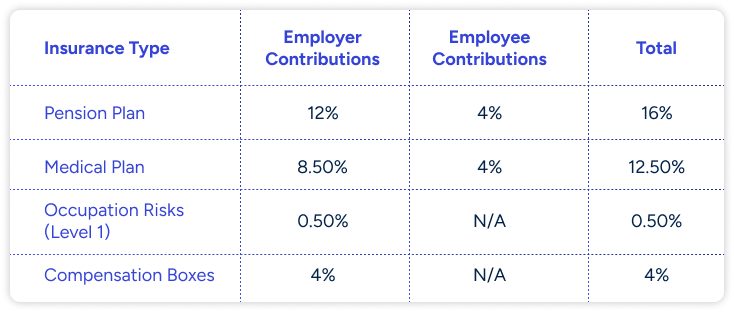
Understanding these components is the first step toward accurate payroll planning. To provide a clearer picture of the financial commitment involved, the following breakdown details the specific contribution percentages for 2026, outlining the statutory distribution between employer and employee obligations.
Some employers may qualify for exemptions on certain components under specific conditions, but that does not remove the need for structured payroll planning. This is one of the reasons many international companies seek local guidance before scaling their teams. The issue is not whether Colombia is attractive. It is whether the employment structure is being built correctly.
.jpg)
Which Colombian cities matter most for technical hiring?
US companies often ask whether technical hiring in Colombia should be approached as one national market. In practice, it should not.
Bogotá remains the broadest market for technical and corporate roles, offering depth, multilingual talent and strong connectivity to multinational environments.
Medellín is particularly relevant for software and digital innovation ecosystems, with a well-established reputation among international employers.
Other cities may also play a role depending on the position, but for most US companies building technical teams, Bogotá and Medellín tend to be the first two markets worth assessing seriously.
Geographic concentration influences both availability and compensation. Employers that budget effectively usually do so with city-level logic in mind, rather than assuming a flat national salary benchmark will apply equally across all roles and locations. To illustrate how this logic functions in practice, the comparison below maps the salary variations across these distinct hubs, providing a clear benchmark for senior technical roles in Colombia relative to their US equivalents.
%20-%20Colombia%20Vs.%20USA%20(2026).jpg)
What skills are most in demand in Colombia right now?
The Colombian technical market continues to show strong demand for software engineering and digital specialisation. The broader source base behind this article highlights consistent demand around technologies such as Python, Node.js and Java, alongside increased relevance for certifications that validate practical capability.
This matters for US companies because technical hiring decisions are not only about role title. Two engineers with the same title may command very different compensation depending on stack, certification level, English proficiency and direct experience working with international products or distributed teams. To visualize the financial impact of these credentials, the following data illustrates the salary premium associated with advanced education and specialized certifications in the Colombian market:
.jpg)
In 2026, a more precise hiring strategy is usually more effective than a broad one. Employers who define their technology requirements clearly, align expectations around seniority and understand the market premium of certain skills tend to hire faster and more accurately.
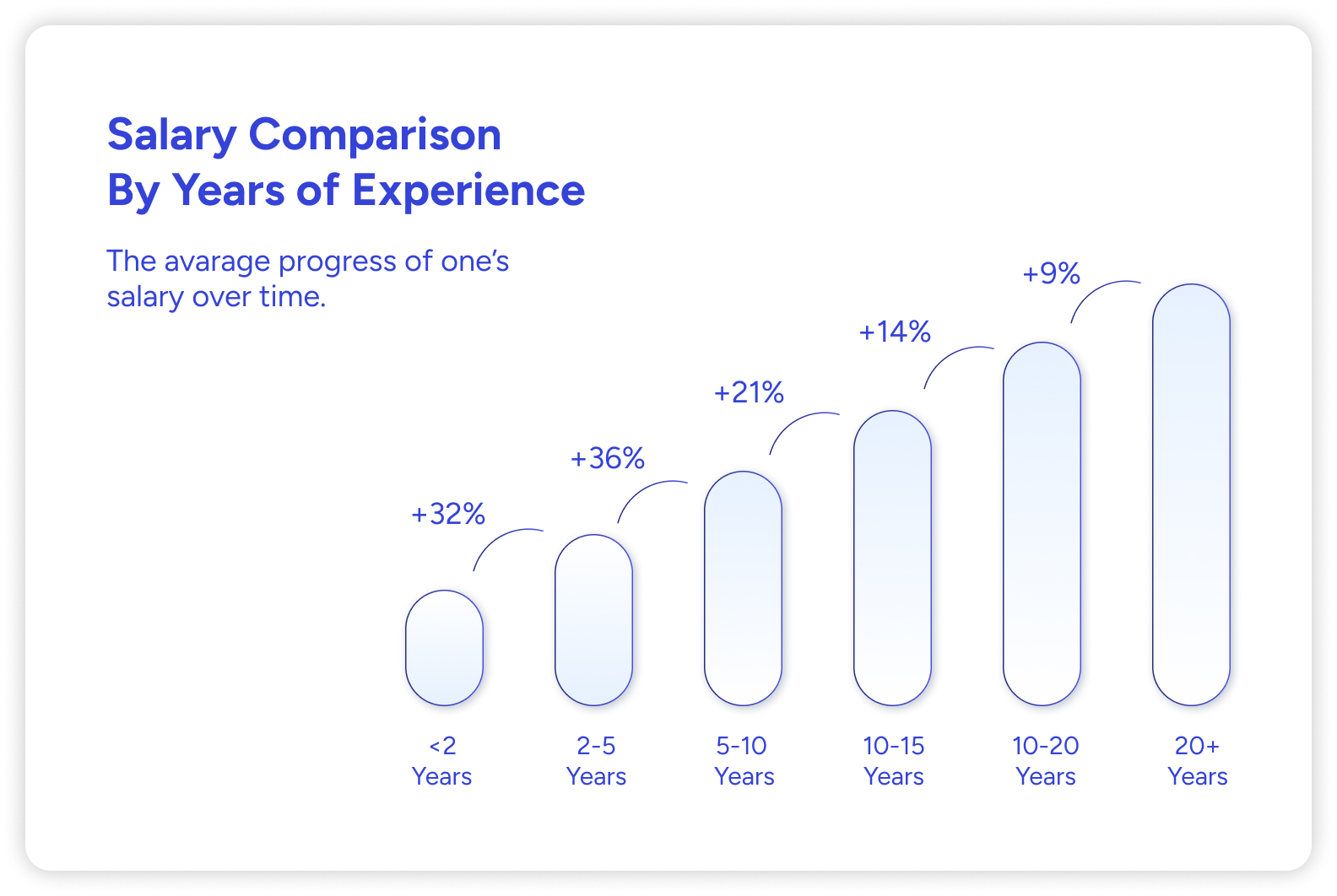
Beyond academic background, seniority remains the most consistent driver of salary growth; the chart below maps this progression, helping US leads calibrate their budgets according to the years of experience required for each role.
What should US companies verify before hiring technical talent in Colombia?
Before starting a hiring process in Colombia, US companies should verify five things.
1. Is the salary benchmark based on the right market segment?
General salary averages are not enough for technical hiring. Use role-specific and seniority-specific benchmarks.
2. Have employer obligations been budgeted properly?
Gross salary is not the full employment outlay. Contributions and statutory provisions need to be reflected in planning.
3. Is the role location-sensitive?
Bogotá and Medellín do not always behave the same way. City-level concentration can influence both availability and compensation.
4. Does the role require bilingual or internationally experienced talent?
English fluency and prior experience with US teams often move compensation upwards, especially for specialist roles.
5. Is the company choosing the right employment structure?
Hiring directly, using a local entity or working with a workforce partner each creates different operational implications.
These five checkpoints do more than improve hiring efficiency. They also reduce risk and increase internal confidence, which is exactly what many leadership teams need before committing to team expansion in a new market.
When does it make sense to work with a workforce partner in Colombia?
For some US companies, the right move is to hire directly through an existing local structure. For others, especially those entering the market for the first time, the challenge is not only finding talent. It is creating the right operational layer around that talent.
That includes payroll accuracy, legal alignment, local employment logic, onboarding, retention and day-to-day workforce administration. In those cases, working with a partner can make sense because it gives the company a more controlled route into the market without losing visibility over team quality or employment standards.
From a trust-building perspective, this is often one of the decisive issues for US leads. They do not just want access to profiles. They want confidence that the market is being interpreted correctly and that their hiring decisions are being implemented with rigour.
Final thought
Colombia has earned its place as a serious technical hiring market for US companies. But the real advantage is not found in headline salary comparisons alone. It comes from combining technical quality with the right employer budgeting logic, the right market understanding and the right workforce structure.
For companies that want to build well in Colombia, the question is no longer whether talent exists. It is whether they are approaching the market with enough precision to earn the outcome they want.
If your team is assessing Colombia for technical hiring, the most important first step is not speed, but clarity: the right salary logic, the right employment structure and the right understanding of the market. Remoti helps US companies turn that clarity into a well-built team in Colombia.
.jpg)




Copyright © 2025 Remoti